
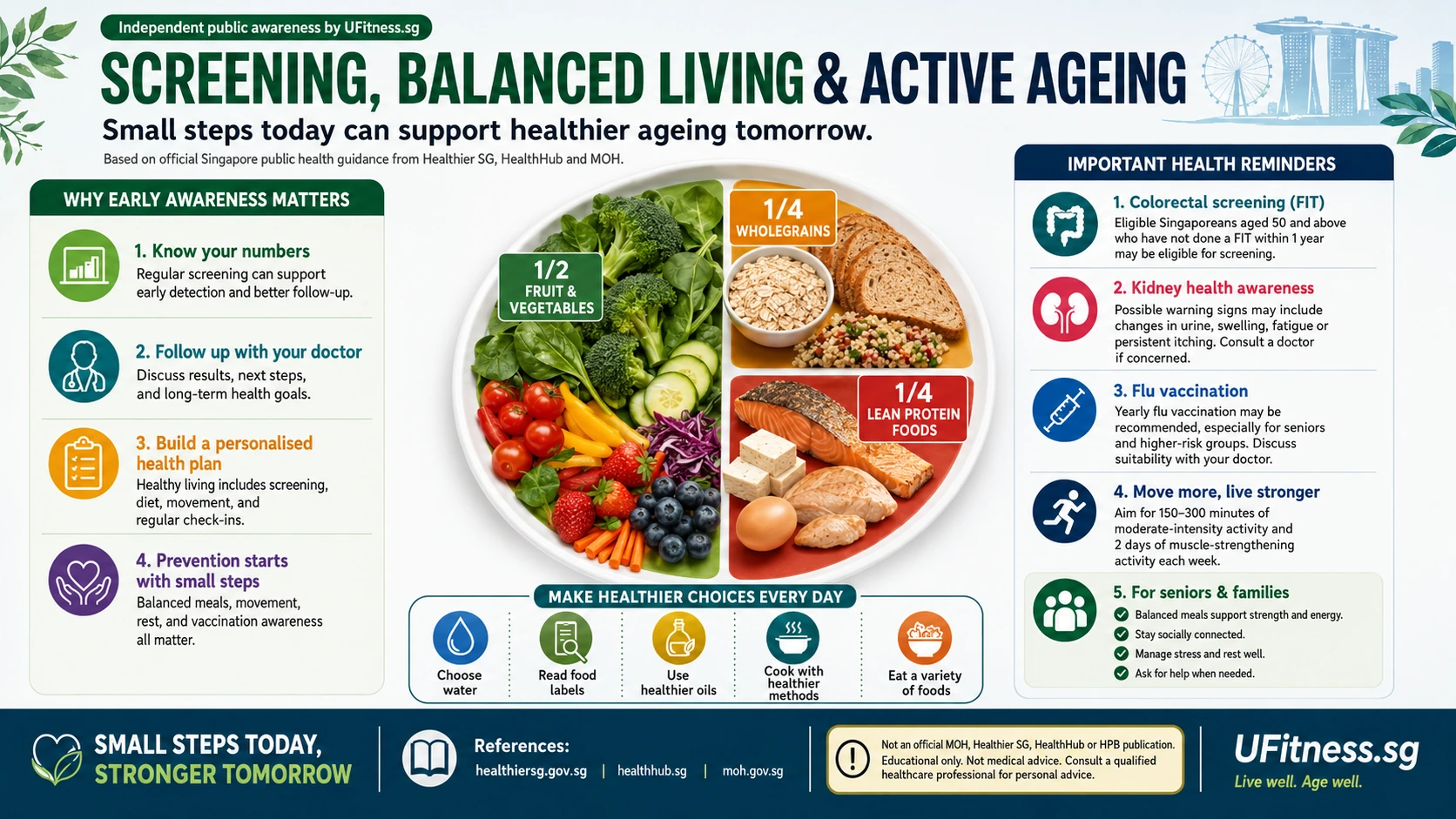
Healthier SG Screening and Balanced Plate Awareness
A personal reflection and public education article on health screening, knowing our numbers, following up with a doctor, balanced eating, regular movement, vaccination awareness, and healthier ageing in Singapore.
Yesterday, I went for my health screening after receiving a letter inviting me for a Healthier SG cardiovascular screening.
The process was simple and familiar: height, weight, blood pressure, and then a consultation with the doctor. What stayed with me was not only the screening itself, but the conversation that followed.
I replied: “One clinic, one doctor, one health plan.”
That simple answer captures the heart of Healthier SG. Officially, Healthier SG encourages residents to build a trusted and longer-term relationship with their family doctor, who can work with them to develop a personalised Health Plan. This may include screening tests, vaccinations, health goals, and lifestyle adjustments. [1]
Health screening is not meant to create fear
Health screening is not meant to create fear. Some people may feel uneasy about drawing blood, needles, or receiving unexpected results. That feeling is understandable.
But screening is a simple and responsible step that helps us know our numbers, follow up with our doctor, and act earlier before health issues become harder to manage.
Under Healthier SG, the Health Plan consultation may include measurements such as height, weight, and blood pressure, as well as discussion on lifestyle habits, diet, exercise, screenings, vaccinations, and follow-up plans where relevant. [2]
Why early checks matter
Many chronic disease risk factors may not feel obvious in daily life. A person may feel normal, continue working, exercising, or caring for family but their blood pressure, blood sugar, cholesterol, or weight-related risk may still need attention.
HealthHub explains that Healthier SG Screening eligibility depends on age, sex, pre-existing conditions, and the date of the last screening. It also states that recommended tests are beneficial because early detection can lead to better management of health and health outcomes. [3]
Know your numbers
Screening can help you understand indicators such as blood pressure, blood sugar, cholesterol, body weight, and other health risk markers.
Follow up properly
Screening is only the first step. The value comes from discussing results, asking questions, and following the doctor’s next-step advice.
Build a health plan
A personalised Health Plan can help translate health conversations into practical lifestyle actions, screenings, vaccinations, and review plans.
The conversation about kidney health
During the consultation, we also spoke about chronic diseases that people may face. One condition the doctor highlighted was chronic kidney disease.
The reason this point stayed with me is simple: chronic kidney disease may not always appear obvious in the early stages. A person may look normal and continue with daily life, but the condition may become more serious later if it is not properly detected, monitored, or managed by healthcare professionals.
HealthHub lists possible signs and symptoms of chronic kidney disease, including high blood pressure, changes in urine output, dark-coloured urine, nausea or vomiting, loss of appetite, fatigue, weakness, swelling of the feet and ankles, and persistent itching. [4]
Colorectal screening, flu vaccination, diet, and exercise
The consultation also touched on other useful public health reminders: colorectal screening, flu vaccination, My Healthy Plate, and basic exercise guidance.
Under Healthier SG Screening, HealthHub states that colorectal cancer screening with the Faecal Immunochemical Test, also known as FIT, applies to eligible Singaporeans aged 50 years and above who have not done a FIT within one year. [5]
The doctor also mentioned annual flu vaccination as something to consider, based on age, health condition, vaccination history, and medical suitability. This should be understood as guidance to discuss with a healthcare professional, not as an obligation.
Healthier SG’s own Health Plan page explains that a Health Plan may include recommended vaccinations, regular screenings, diet and exercise recommendations, and follow-up plans where relevant. [2]
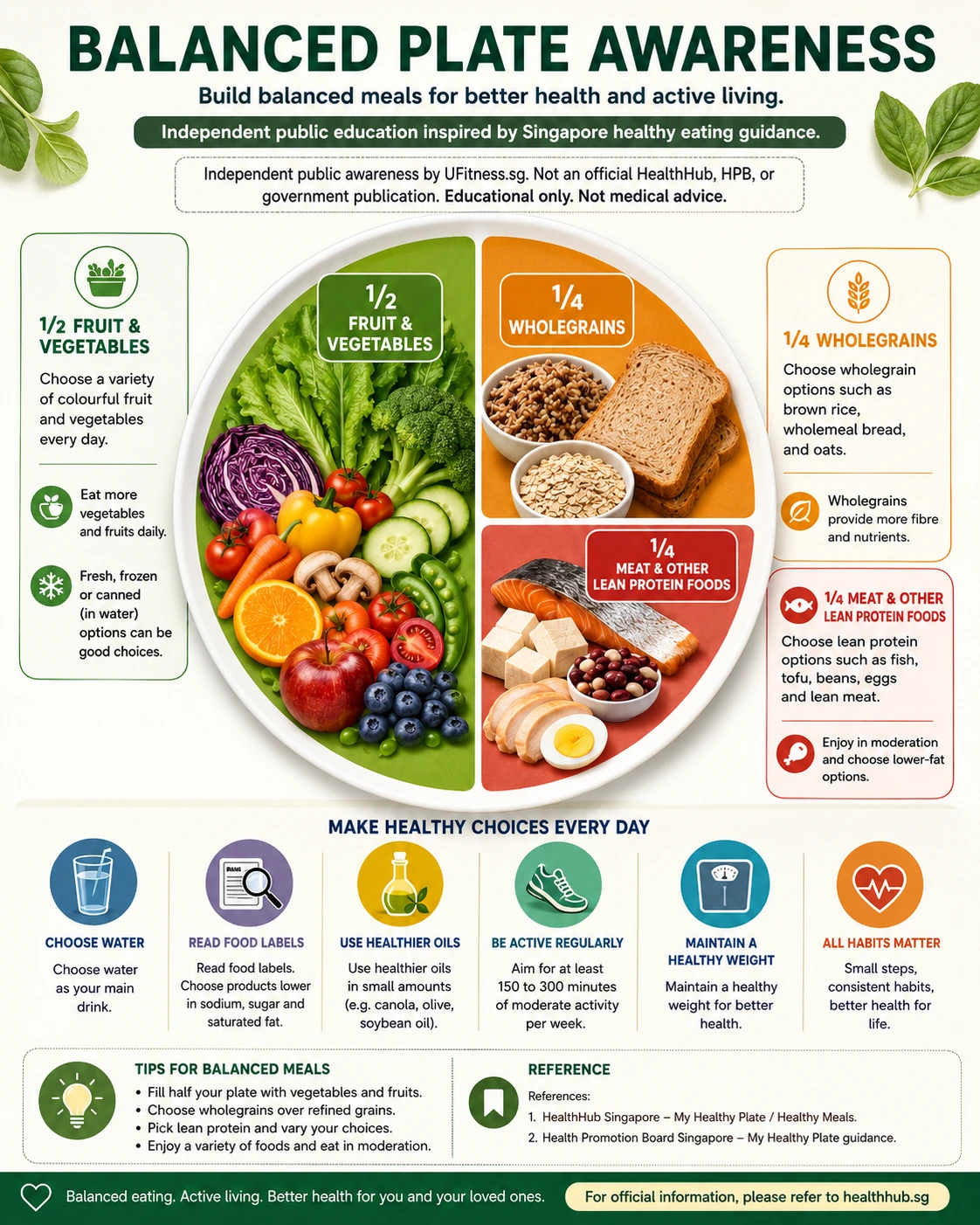
Balanced plate awareness: a simple way to understand healthy eating
HealthHub describes My Healthy Plate, also known as the Quarter, Quarter, Half guide, as a simple visual guide for building balanced meals. The general idea is to fill half the plate with fruit and vegetables, one quarter with wholegrains, and one quarter with meat and other lean protein foods. [6]
This is useful because healthy eating can feel complicated. The balanced plate approach gives people a simple visual structure without turning every meal into a stressful calculation.
½ Fruit & Vegetables
Choose a variety of colourful fruit and vegetables. For many families, adding more vegetables to familiar meals can be a practical first step.
¼ Wholegrains
Choose wholegrain options such as brown rice, wholemeal bread, oats, wholemeal bee hoon, chapati, or other suitable wholegrain choices where possible.
¼ Protein Foods
Include suitable protein foods such as fish, tofu, beans, eggs, lean meat, poultry, and other options depending on personal needs and medical suitability.
Why this matters especially for seniors
For seniors, nutrition is not only about weight. It also relates to strength, energy, recovery, functional ability, and healthy ageing.
HealthHub notes that seniors aged 50 and above can use the Quarter, Quarter, Half proportions to meet nutritional needs, and should aim for enough protein-rich foods to help build and repair muscle tissue and reduce loss of muscle mass. [7]
At the same time, some seniors may face real-life challenges such as lower appetite, dental issues, food restrictions, medication routines, difficulty preparing meals, or budget concerns. This is why the message must remain practical, compassionate, and realistic.
Make healthier choices every day
Balanced eating is not only about the plate. It also includes daily habits such as choosing water, reading food labels, reducing excess sugar and salt, using healthier oils in small amounts, and staying active.
HealthHub recommends choosing healthier oils, making water the drink of choice, eating a variety of foods, choosing healthier options, and using healthier cooking methods such as boiling, grilling, roasting, baking, stir-frying, and steaming instead of deep frying. [7]
- Choose water as your main drink where possible.
- Add more vegetables to familiar meals when you can.
- Choose wholegrains over refined grains where suitable.
- Pick lean protein options and vary your protein sources.
- Use healthier oils in small amounts instead of assuming more is better.
- Use healthier cooking methods such as steaming, grilling, boiling, baking, roasting, or stir-frying.
Exercise still matters
A balanced plate works best when supported by movement. HealthHub’s physical activity guidance recommends that adults aim for 150 to 300 minutes of moderate-intensity aerobic physical activity each week, together with two days of muscle-strengthening activity. [8]
For seniors, this does not mean jumping into intense workouts immediately. It may begin with walking, gentle strengthening, balance work, tai chi, chair-based movement, or daily mobility exercises, depending on health condition, ability, and medical advice.
How this connects with UFitness.sg
At UFitness.sg, we often talk about strength, balance, mobility, frailty awareness, stroke awareness, and functional independence. But active ageing is not only about exercise.
Active ageing should also include screening, follow-up, nutrition awareness, healthy weight management, sleep, stress management, vaccination awareness, and family support.
UFitness.sg position
Fitness supports function, confidence, and quality of life. But responsible fitness should work alongside proper healthcare guidance not replace it.
For people with medical conditions
General healthy eating guidance may not be suitable for every individual. People with diabetes, kidney disease, heart disease, swallowing difficulty, significant weight loss, cancer, frailty, or other medical conditions may need personalised advice.
HealthHub clearly states that My Healthy Plate is a visual guide to support healthier eating habits and does not replace medical advice. People with specific dietary requirements or existing medical conditions should speak with their doctor or clinician for advice suited to their needs. [7]
Small steps today, stronger tomorrow
Healthy living is not built from one dramatic action. It is built from repeated small steps: going for screening, knowing our numbers, following up with our doctor, eating better, moving safely, resting well, and asking for help when needed.
The message is not to create fear. The message is to create awareness.
Screening gives us a chance to understand what may not be obvious. A balanced plate gives us a simple way to improve everyday meals. Movement helps us maintain function. Follow-up with a doctor helps us stay guided.
For seniors and families, this is the real value: better awareness, better planning, and better responsibility before health becomes harder to manage.
Start with clarity, not fear
Health screening, balanced eating, safe movement, and regular follow-up can help Singaporeans take practical steps toward healthier ageing.
Related UFitness.sg resources
Continue exploring UFitness.sg public education resources:
- Evidence-Based Fitness & Health Calculators Singapore
- Senior Fitness Readiness Tool Singapore
- Frailty, Ageing, Strength & Movement Awareness
- Stroke Awareness & Recovery Support Singapore
- UFitness.sg Legal Disclaimer, Health Notice & Privacy Policy
References & annotations
- Healthier SG — What is Healthier SG?
Healthier SG official explanation
Annotation: Used to support the explanation of Healthier SG as a preventive health initiative, trusted family doctor relationship, and personalised Health Plan. - Healthier SG — Stay Healthy For Longer / Health Plan
Healthier SG Health Plan information
Annotation: Used to support the explanation that a Health Plan may include steps to stay healthy or manage chronic conditions, screening tests, vaccinations, diet and exercise recommendations, and annual check-ins. - HealthHub — Healthier SG Screening
Healthier SG Screening recommended tests and eligibility
Annotation: Used to support the explanation that eligibility depends on age, sex, pre-existing conditions, and last screening date, and that recommended screening supports early detection and better health management. - HealthHub — Chronic Kidney Disease
HealthHub Chronic Kidney Disease
Annotation: Used to support safe wording on possible signs and symptoms of chronic kidney disease and the need for proper medical assessment. - HealthHub — Healthier SG Screening Journey / Colorectal Cancer Screening
Healthier SG Screening Journey
Annotation: Used to support the statement that eligible Singaporeans aged 50 years and above may be eligible for colorectal cancer screening with FIT if they have not done a FIT within one year. - HealthHub — Healthy Meals with My Healthy Plate
HealthHub My Healthy Plate explanation
Annotation: Used to support the My Healthy Plate / Quarter, Quarter, Half concept: half fruit and vegetables, one quarter wholegrains, and one quarter meat and other lean proteins. - HealthHub — Nutrition Hub / My Healthy Plate
HealthHub Nutrition Hub
Annotation: Used to support the balanced plate guidance, senior nutrition note, reminder that My Healthy Plate does not replace medical advice, and practical tips such as healthier oils, water, variety, healthier options, and cooking methods. - HealthHub — Physical Activity Guidance
Aim for at least 150 Minutes of Physical Activity Every Week
Annotation: Used to support the guidance of 150 to 300 minutes of moderate-intensity aerobic physical activity weekly and two days of muscle-strengthening activity. - UFitness.sg — Legal Disclaimer, Health Notice & Privacy Policy
UFitness.sg Legal Disclaimer
Annotation: Internal compliance reference. This reinforces that UFitness.sg public education content does not replace professional medical, nutrition, or healthcare advice.
This article avoids using official MOH, Healthier SG, HealthHub, or HPB logos. It does not claim to be an official government publication. It does not diagnose any person, prescribe treatment, prescribe a personalised diet, promise disease prevention, or imply that fitness and nutrition can replace medical care. The article is framed as independent public education aligned with official Singapore preventive health and healthy eating references.
Published by UFitness.sg – Independent public education on active ageing, functional fitness, balanced living, and preventive health awareness in Singapore.