
Stroke Awareness Singapore: Act FAST, Survive Stronger, Rebuild Life
Inspired by Maya and Terence, two stroke survivors whose journeys remind us that recovery is not only about surviving. It is about rebuilding strength, confidence, identity, hope and daily life – one small step at a time.
Small Steps. Big Impact.
Stroke is not easy. It can arrive suddenly and change a person’s body, speech, emotions, independence, confidence and identity. For some survivors, the most difficult part begins after the emergency when they wake up to a life that feels different from before.
This reflection is inspired by Maya and Terence, shared with permission, not as medical case studies but as human stories of courage. Both experienced haemorrhagic stroke. Both had to face a new reality. And both continue to show that recovery is not a straight line, but a journey of patience, support, movement and resilience.
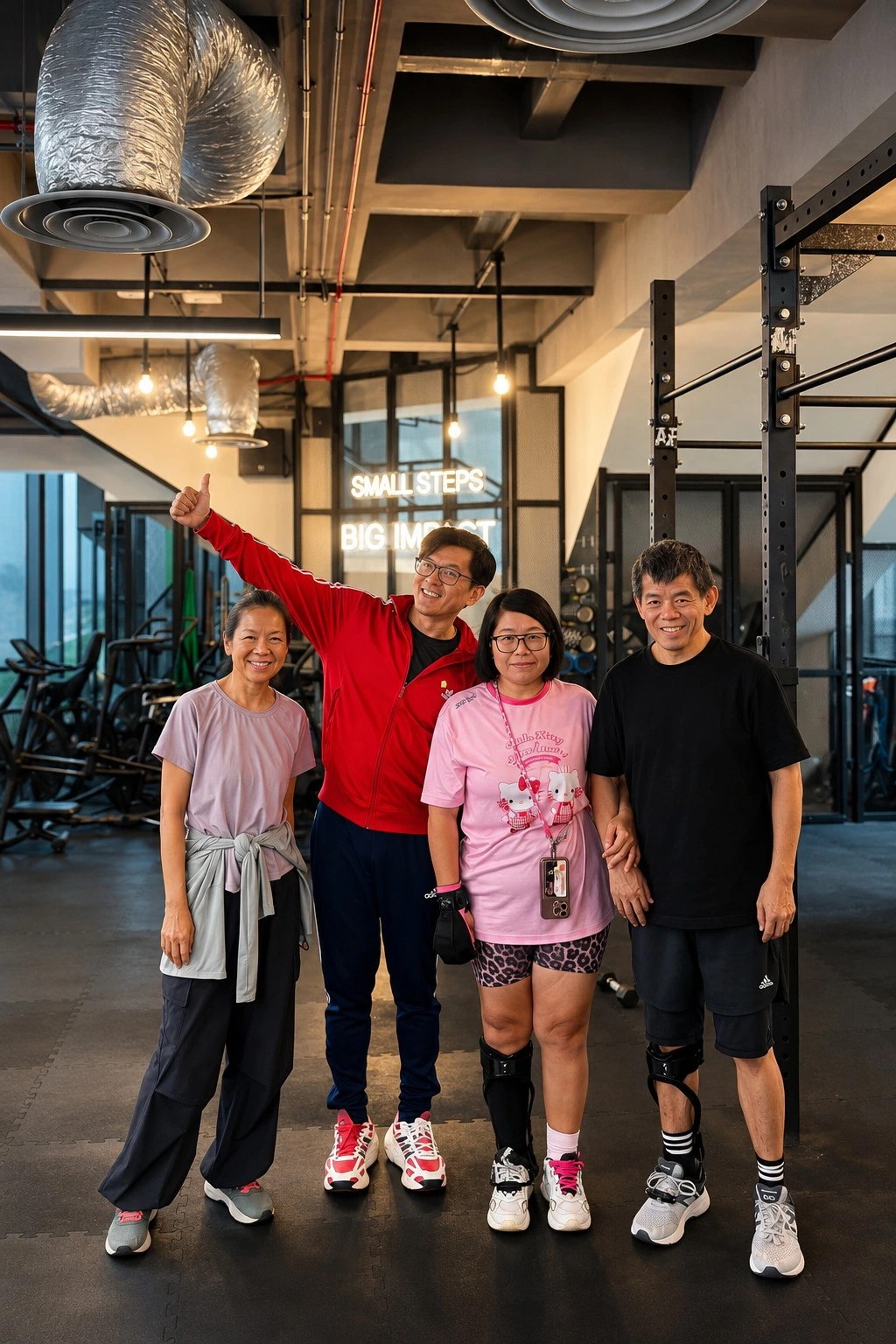
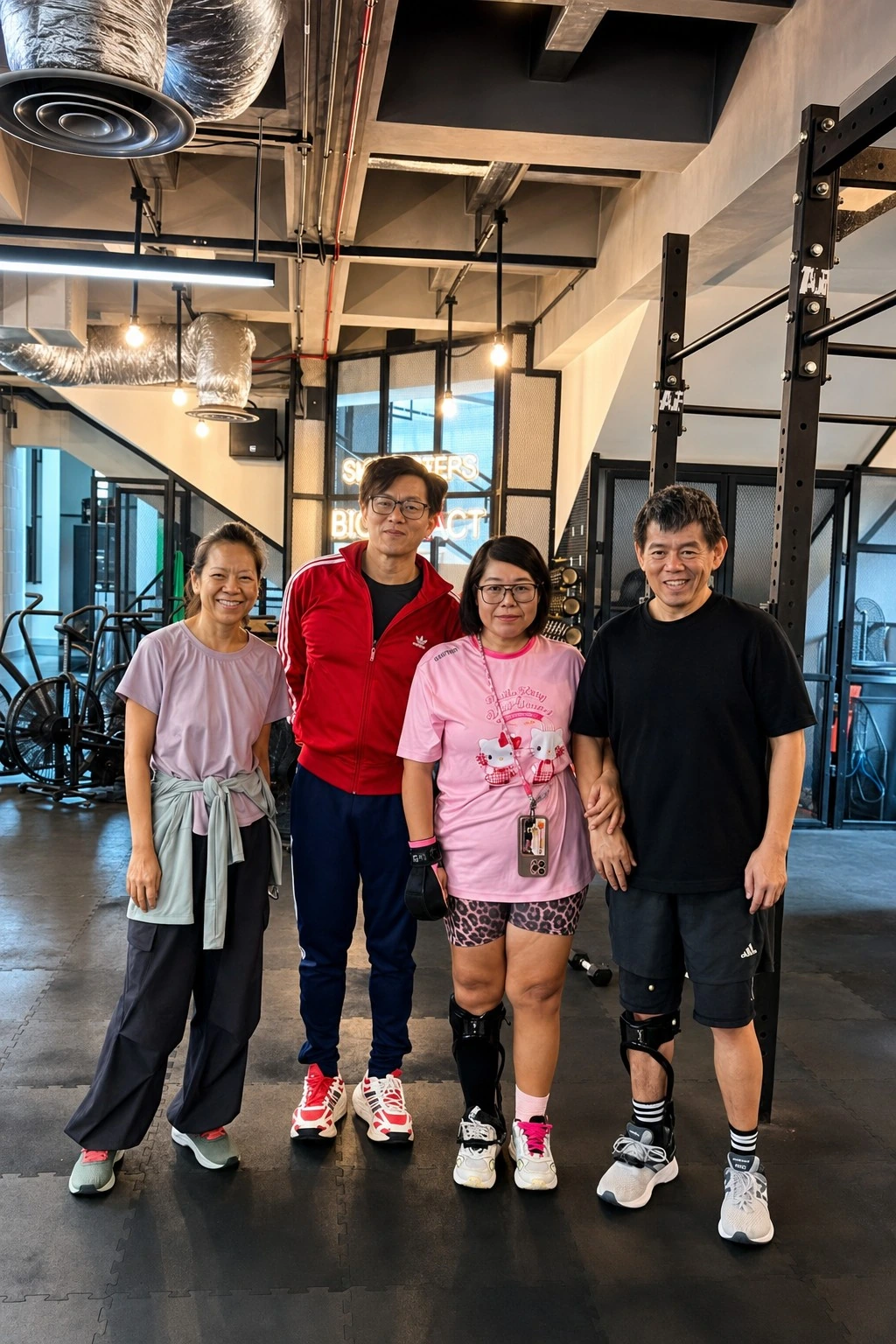
Terence: Finding a New Voice After Stroke
After his stroke in 2020, Terence’s life took an unexpected turn. From his public sharing, he faced aphasia and emotional struggles. Aphasia can affect communication, expression, reading, writing and the ability to put thoughts into words.
But Terence did not allow stroke to become the final chapter of his story. He rebuilt his identity through writing, drawings, illustrations, graphic novels and poetry. What stroke affected in one area, he slowly rebuilt through creativity, reflection and purpose.
Today, his journey points towards authorship, advocacy and storytelling. It reminds us that recovery is not only about walking better or moving better. Sometimes, recovery is also about finding a new way to speak, create, connect and be heard again.
His story teaches a powerful lesson: blame does not heal. Acceptance, reflection and action can open the door to recovery.
Maya: Rebuilding Through Movement and Community
Maya’s journey shows the quiet strength of a survivor who refuses to stop living. From the activities she continues to take part in, swimming, chair-based movement, Piloxing, archery and air pistol, we see more than exercise. We see courage.
After a stroke, even simple movements can feel uncertain. Balance may change. Strength may change. Confidence may change. The body may not respond the same way as before. That is why every attempt matters.
One session. One movement. One smile. One step forward.
Maya’s journey reminds us that stroke survivors need more than rehabilitation. They need community, encouragement, safe spaces, social connection and people who believe they can continue participating in life.
What Their Stories Teach Us
Maya and Terence have different recovery journeys, but the message is the same: stroke may change a person’s life, but it does not erase their value, identity or future.
Terence rebuilt through words, art and advocacy. Maya rebuilt through movement, participation and community. Both remind us that survival is only the beginning.
What Is a Stroke?
Stroke happens when blood supply to part of the brain is disrupted. This may happen because of a blocked blood vessel or because of bleeding in or around the brain. The impact can affect movement, balance, sensation, vision, swallowing, speech, memory, emotions and daily function.
Two main types of stroke
- Ischaemic stroke: usually caused by a blocked blood vessel supplying the brain.
- Haemorrhagic stroke: caused by bleeding from a blood vessel in or around the brain.
The effects of stroke depend on which part of the brain is affected, how serious the injury is, how quickly medical treatment begins, and the person’s overall condition before the stroke.
Know the F.A.S.T. Stroke Warning Signs
Stroke signs can appear suddenly. In Singapore, the public should recognise F.A.S.T. and call 995 immediately when stroke is suspected.
Do not wait and see. Do not assume the person is just tired. Do not drive the person yourself if emergency symptoms are present. Call 995 and note the time symptoms first appeared.
Other Stroke Signs Families Should Not Ignore
F.A.S.T. is easy to remember, but stroke may also show up in other sudden ways. Families should take sudden changes seriously, especially when symptoms appear on one side of the body or affect speech, balance or vision.
- Sudden weakness or numbness on one side of the body
- Sudden difficulty standing, walking or coordinating movement
- Sudden slurred speech or difficulty understanding words
- Sudden vision changes or double vision
- Sudden swallowing difficulty
- Sudden confusion or unusual behaviour
- Sudden severe headache, especially if unusual for the person
Can Other Illnesses Lead to Stroke Risk?
Some stroke risks cannot be changed, such as age, family history or previous stroke history. But many important risk factors can be managed through medical follow-up, healthier habits and better awareness.
- High blood pressure
- Diabetes
- High cholesterol
- Smoking
- Obesity
- Physical inactivity
- Heart rhythm problems such as atrial fibrillation
- Previous transient ischaemic attack, sometimes called a “mini-stroke”
- Poor sleep, high stress and poorly managed chronic disease
The message is not fear. The message is awareness. Regular screening, blood pressure control, medication adherence, safer movement habits and an active lifestyle can all support better long-term health.
If Someone Survives a Stroke, What Comes Next?
Surviving a stroke is only the beginning. The next stage may involve medical reviews, medication, blood pressure monitoring, physiotherapy, occupational therapy, speech therapy, nutrition support, emotional support and caregiver education.
Some survivors may experience weakness, reduced balance, fatigue, fear of falling, speech changes, swallowing difficulties, memory changes, mood changes or loss of confidence. This is why recovery needs structure, patience and a team approach.
Practical next steps after stroke
- Attend medical follow-ups consistently.
- Follow the rehabilitation team’s plan.
- Monitor blood pressure and chronic conditions.
- Take prescribed medication as advised.
- Reduce fall risks at home.
- Rebuild walking, balance, strength and daily function gradually.
- Seek emotional support when needed.
- Celebrate small progress because small steps matter.
Where UFitness.sg Fits In
UFitness.sg does not replace doctors, hospitals, physiotherapists, occupational therapists, speech therapists or rehabilitation professionals. Our role is public education, movement awareness, functional fitness support and active ageing encouragement.
For seniors, families and recovering individuals, simple movement awareness tools can help start conversations about strength, balance, mobility and daily function. These tools are not medical tests and should not be used to diagnose stroke or replace professional advice.
Helpful Singapore Stroke Resources
For stroke information, emergency guidance, survivor support and caregiver support, families can refer to these Singapore-based resources.
Featured Survivor Stories
With permission, this article acknowledges Maya and Terence, whose personal journeys remind us that stroke awareness is not only about emergency response. It is also about recovery, identity, movement, community and hope.
Final Reflection
Maya and Terence remind us that stroke can change a life suddenly, but it does not have to remove hope. Recovery may be slow. It may be frustrating. It may require help, courage and many repeated attempts.
But every small step matters. A steadier walk matters. A stronger grip matters. A clearer word matters. A safer home matters. A supportive family matters. A community that welcomes survivors back into life matters.
References and Support Links
HealthHub Singapore — Stroke Awareness and F.A.S.T.
https://www.healthhub.sg/health-conditions/strokeawareness
HealthHub Singapore — Stroke Signs and Symptoms
https://www.healthhub.sg/health-conditions/stroke-signs-and-symptoms
Singapore Civil Defence Force — Emergency Medical Services
https://www.scdf.gov.sg/home/about-scdf/emergency-medical-services
Stroke Support Station Singapore
https://s3.org.sg/about-us/
Singapore National Stroke Association
https://www.snsa.org.sg/