UFitness.sg | Active Ageing AwarenessFrailty Is Real: What Ageing Teaches Us About Strength, Movement and Independence
Frailty does not always arrive loudly. Sometimes it begins quietly, a slower walk, a longer pause before standing, a hand reaching for support, or the daily struggle to rise from a chair.
Over the years, I have witnessed seniors who were once active slowly become weaker, slower and less confident in their movement. The weakening of the legs, the loss of balance, the swelling of the feet, and the careful shuffle across the floor are not just “signs of old age”. They may be signals that strength, mobility and independence are changing.
As a fitness professional by discipline, I have developed a habit of observing walking speed, posture, balance and movement confidence. Not to judge seniors, but to understand one important truth: the body often tells its story through movement.
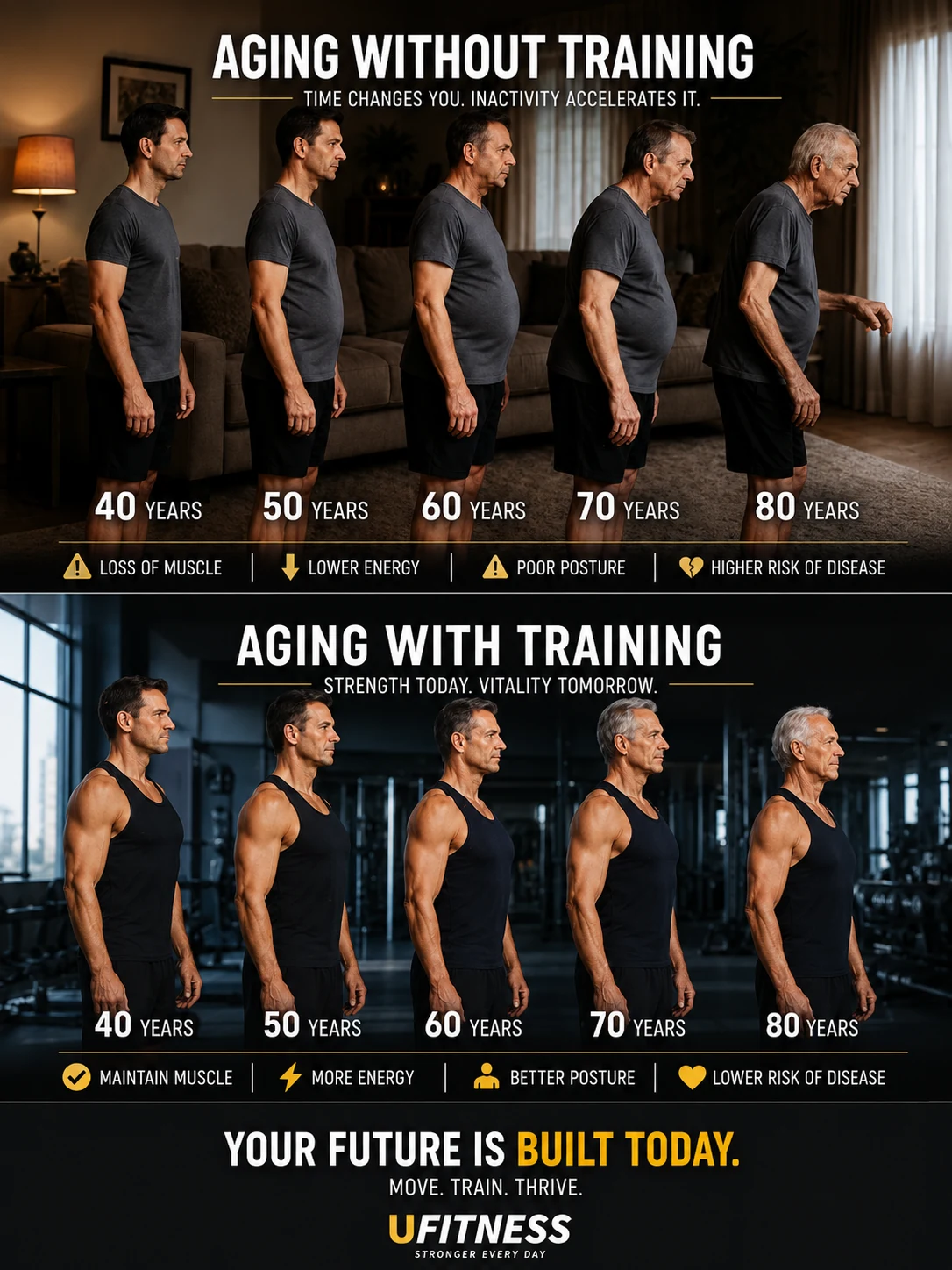
Visual analogies can help make an invisible ageing process easier to understand, but they should never be used to shame ageing.
Ageing is natural. Frailty should not be ignored.
Ageing is part of life. We should never shame ageing, fear ageing, or pretend that everyone must look young forever. But there is a difference between natural ageing and avoidable decline.
Frailty is not simply about appearance. A senior may look “okay” when seated, but the real picture often appears when they try to stand, walk, turn, climb a step, carry groceries, or recover from a small loss of balance.
We do not train seniors to look young. We train movement so they can continue standing, walking, reaching, carrying, balancing and living with dignity.
This is why frailty awareness matters. When families notice the early signs, they can respond earlier with safer movement, proper nutrition, medical review where needed, and practical support.
What frailty can look like in daily life
Frailty is often seen in ordinary moments. These signs may look small at first, but they can affect confidence, independence and quality of life over time.
Slower walking speed
Walking becomes more cautious, slower, or more tiring than before.
Difficulty standing up
A senior may need to push hard from the chair or rock forward before rising.
Loss of balance confidence
Turning, stepping sideways, or walking on uneven ground may feel unsafe.
Weakening of the legs
The legs may feel less able to support daily movement and repeated standing.
Reduced daily activity
The senior may avoid going out, walking far, or joining activities.
Swelling, pain or unusual fatigue
These should not be dismissed. They may require proper healthcare review.
Important: Swelling of the feet, breathlessness, chest discomfort, dizziness, recent falls, sudden weakness, severe pain or rapid decline should be reviewed by qualified healthcare professionals. Fitness observation is not a medical diagnosis.
Understanding the Clinical Frailty Scale
The Clinical Frailty Scale, often known as the CFS, is commonly referenced in healthcare and geriatric care because it helps trained professionals summarise a person’s level of fitness or frailty after proper clinical evaluation.
It is important to understand this clearly: the CFS is not a casual online quiz and should not be used to label seniors casually. It is a judgement-based clinical tool used in the right clinical context.
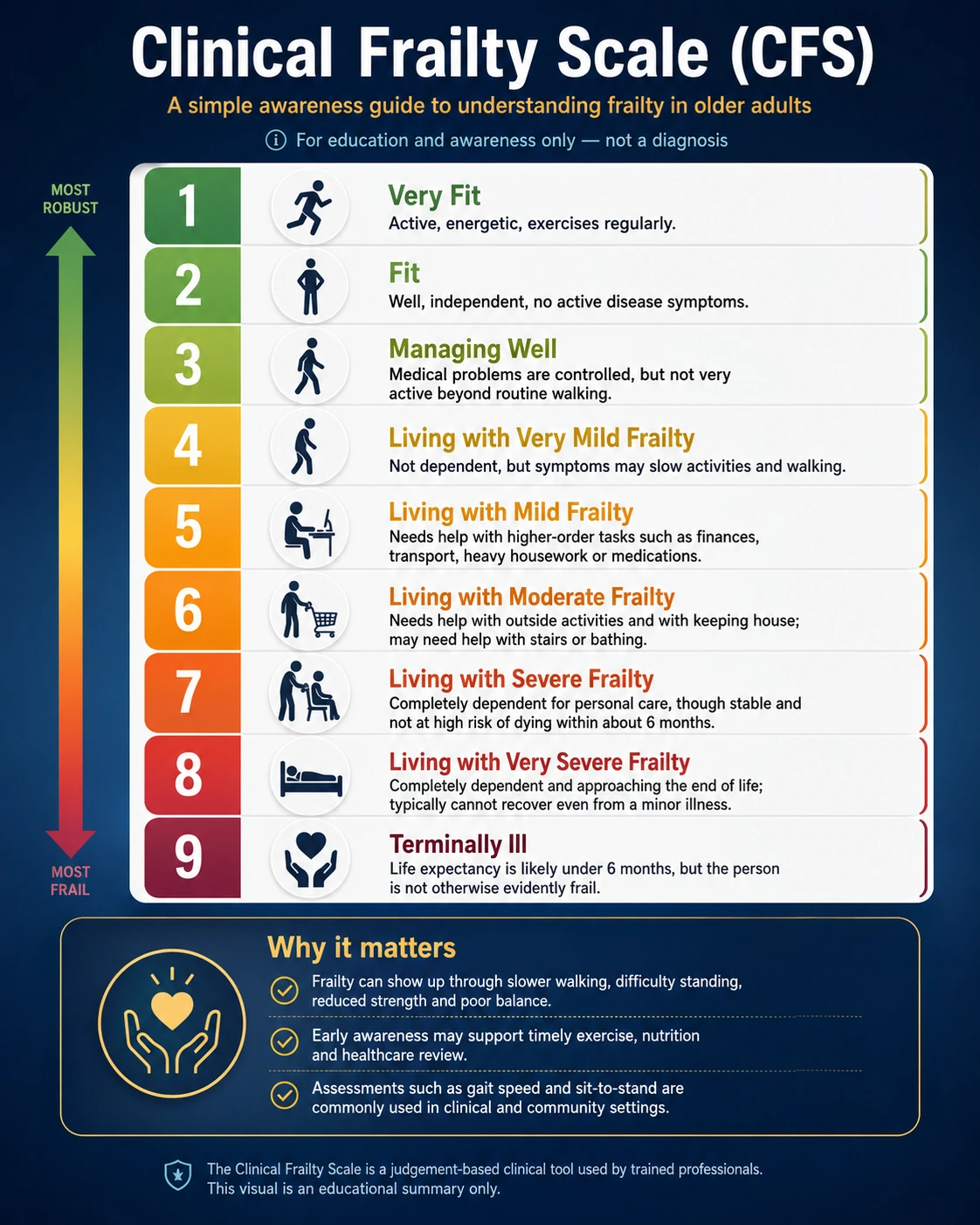
Educational awareness visual only. For clinical use, refer to the official Clinical Frailty Scale guidance and trained healthcare professionals.
Awareness point: The value of learning about frailty is not to self-diagnose. The value is to recognise that frailty can progress gradually, and earlier awareness may encourage timely healthcare review, nutrition support, safe movement and family support.
Movement tells us more than appearance
In a senior functional assessment, frailty is often better understood through movement rather than appearance alone. Commonly used assessments such as gait speed, sit-to-stand ability and balance-related stepping tasks can provide meaningful insights into mobility, lower-limb strength, coordination, balance confidence and functional independence.
These assessments are widely recognised in clinical, rehabilitation, hospital, community health and senior functional assessment settings because they reflect daily-life ability. How fast a senior walks, how confidently they rise from a chair, and how safely they step or change direction can reveal much more than what we see on the surface.
Gait SpeedWalking speed is a simple but powerful observation. A slower walking pace may suggest reduced strength, confidence, endurance or mobility.
Sit-to-Stand AbilityThe ability to rise from a chair reflects lower-limb strength, balance, coordination and confidence in everyday movement.
Stepping and BalanceStepping tasks can show how well a senior changes direction, reacts, coordinates movement and manages balance demands.
These tests should be conducted safely and appropriately. Seniors with medical conditions, recent falls, dizziness, chest discomfort, pain, swelling or mobility concerns should seek medical or rehabilitation advice before attempting physical tests.
Why this matters in Singapore
Singapore is ageing rapidly. The national direction is no longer only about living longer, but about ageing better, staying active, socially connected and supported within the community.
This is where fitness, healthcare, families and community support must come together. Strength training, balance work, safe walking, daily movement, nutrition and social connection all play a role in helping seniors preserve function for as long as possible.
Frailty awareness should not begin only after a fall, hospitalisation or visible decline. It should begin when we notice the quieter signs, slower walking, difficulty standing, reduced confidence, weaker legs, poor balance and the gradual loss of daily movement independence.
The UFitness.sg perspective
At UFitness.sg, active ageing is not about chasing youth. It is about preserving dignity, confidence and functional independence.
A senior does not need to train like an athlete. But many seniors can benefit from appropriate strength work, balance practice, mobility training, walking confidence, functional movement and simple progressive exercises suited to their condition.
The goal is practical: to stand better, walk better, move safer, reduce unnecessary fear, and remain more capable in daily life.
A final thought
Frailty is real. But awareness is also powerful.
When we observe a senior walking slower, struggling to stand, losing balance or becoming less confident, we should not simply say, “That is old age.”
We should ask a better question:
What support, movement, care and encouragement can help this person continue living with strength, confidence and dignity?
That is the heart of active ageing. Not perfection. Not youth. But the ability to keep moving, keep participating and keep living meaningfully.
Disclaimer: This article is for general education and awareness only. It does not provide medical diagnosis, treatment, rehabilitation advice or Clinical Frailty Scale scoring. Frailty, falls risk, swelling, pain, dizziness, breathlessness, weakness and mobility decline should be assessed by qualified healthcare professionals where appropriate. Exercise programmes should be tailored to the individual’s health condition, ability and safety needs.