
Prepare safely
Stand beside stable support. Keep a helper close when needed and remove nearby trip hazards.

Use a fixed countertop, heavy table or securely positioned sturdy chair. Have another adult nearby when there is any uncertainty.
Sudden facial droop, arm weakness or speech difficulty may indicate stroke. HealthHub advises calling 995 immediately.[4]
Complete the positions in order. Each position becomes progressively harder, as in the CDC STEADI four-stage balance protocol.[1]
Stand beside stable support. Keep a helper close when needed and remove nearby trip hazards.
Start with feet together. Stop at the first position that cannot be held safely for the full 10 seconds.
Record the highest stage completed safely today. Balance can vary with fatigue, medication, pain and illness.
The four instructional images below are displayed at full clarity with no overlay effect, no dark filter and no crop. Start each timer only after the feet are positioned and stable.
Place both feet side by side. Stand upright and try to hold the position without stepping or taking support.
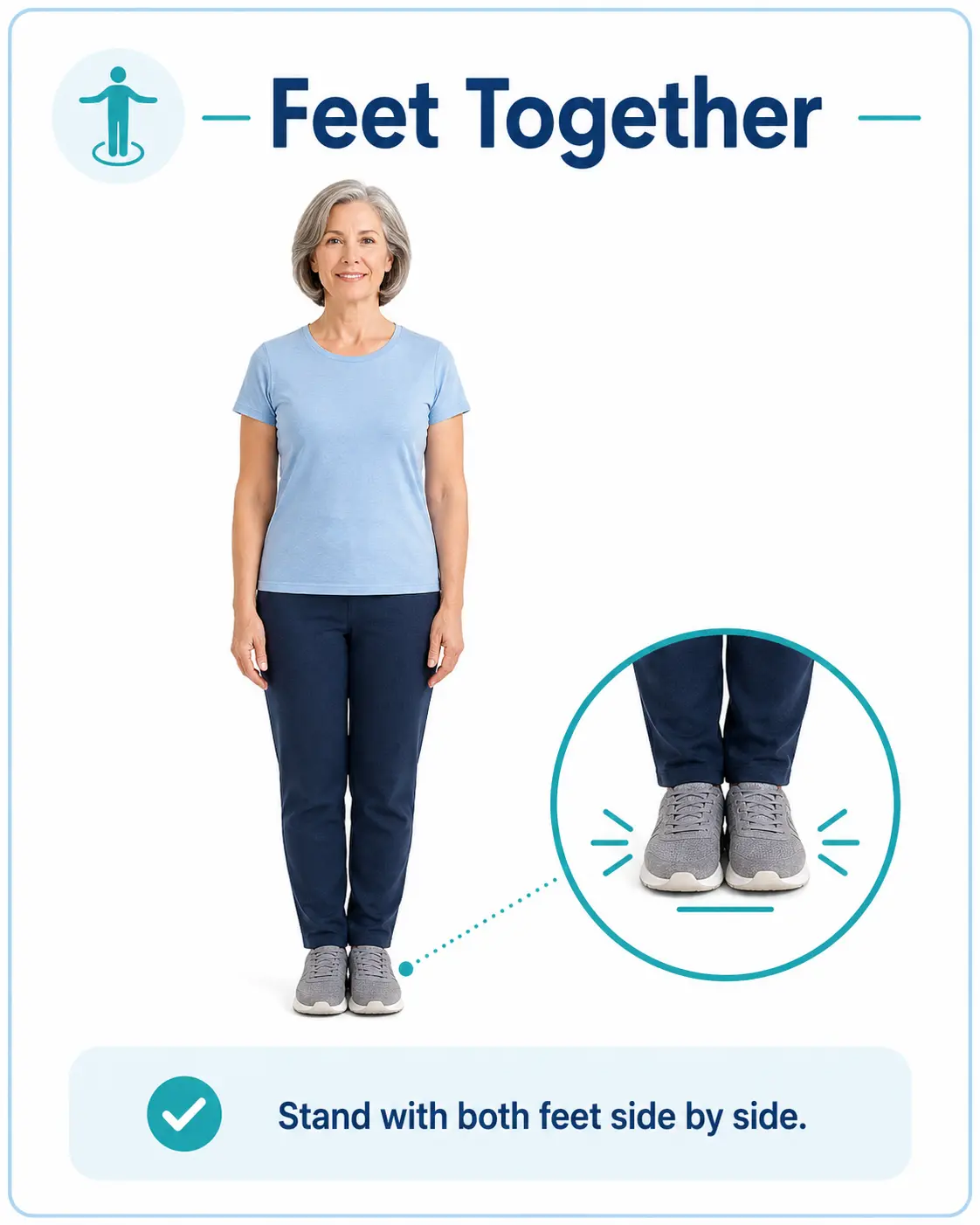
Use this image as a clear guide for foot placement and body position.
Place the instep of one foot beside the big toe of the other foot. Keep both feet flat and stand upright.
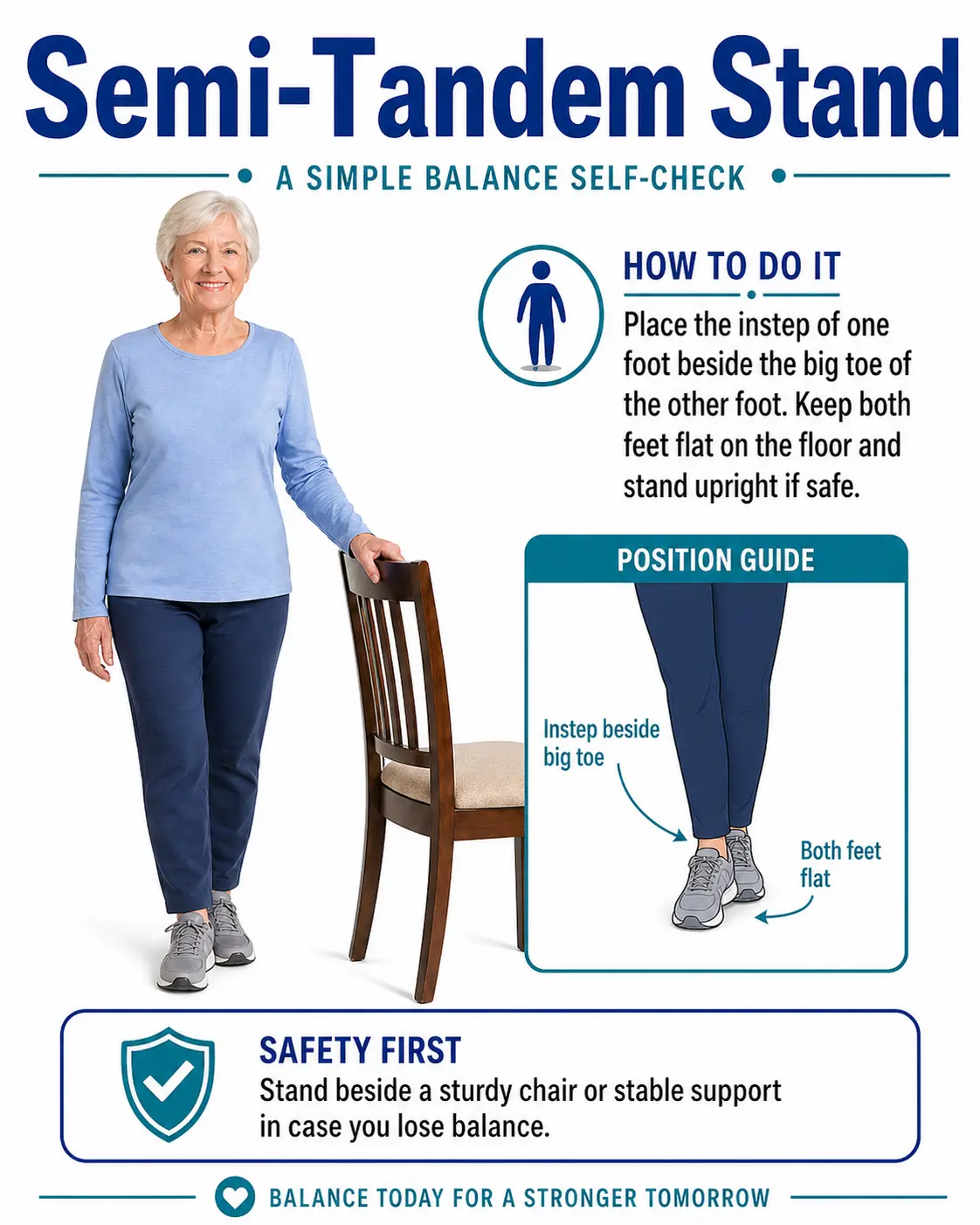
This image shows the half heel-to-toe stance used in Stage 2.
Place one foot directly in front of the other, with the heel touching the toes of the rear foot.
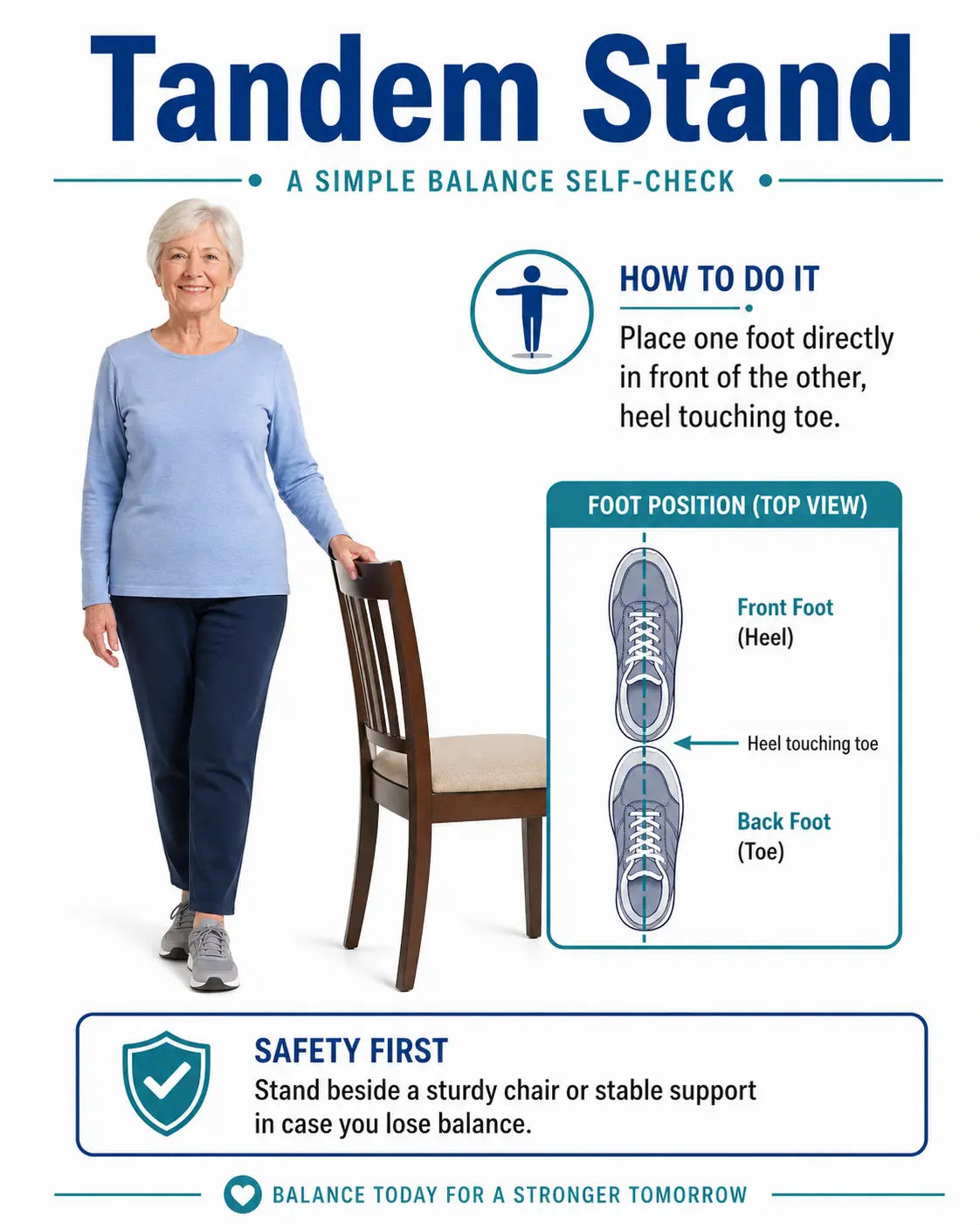
This image shows the heel-to-toe tandem stance used before the one-leg stage.
Stand on one leg only when safe. Keep stable support within easy reach and stop before control is lost.
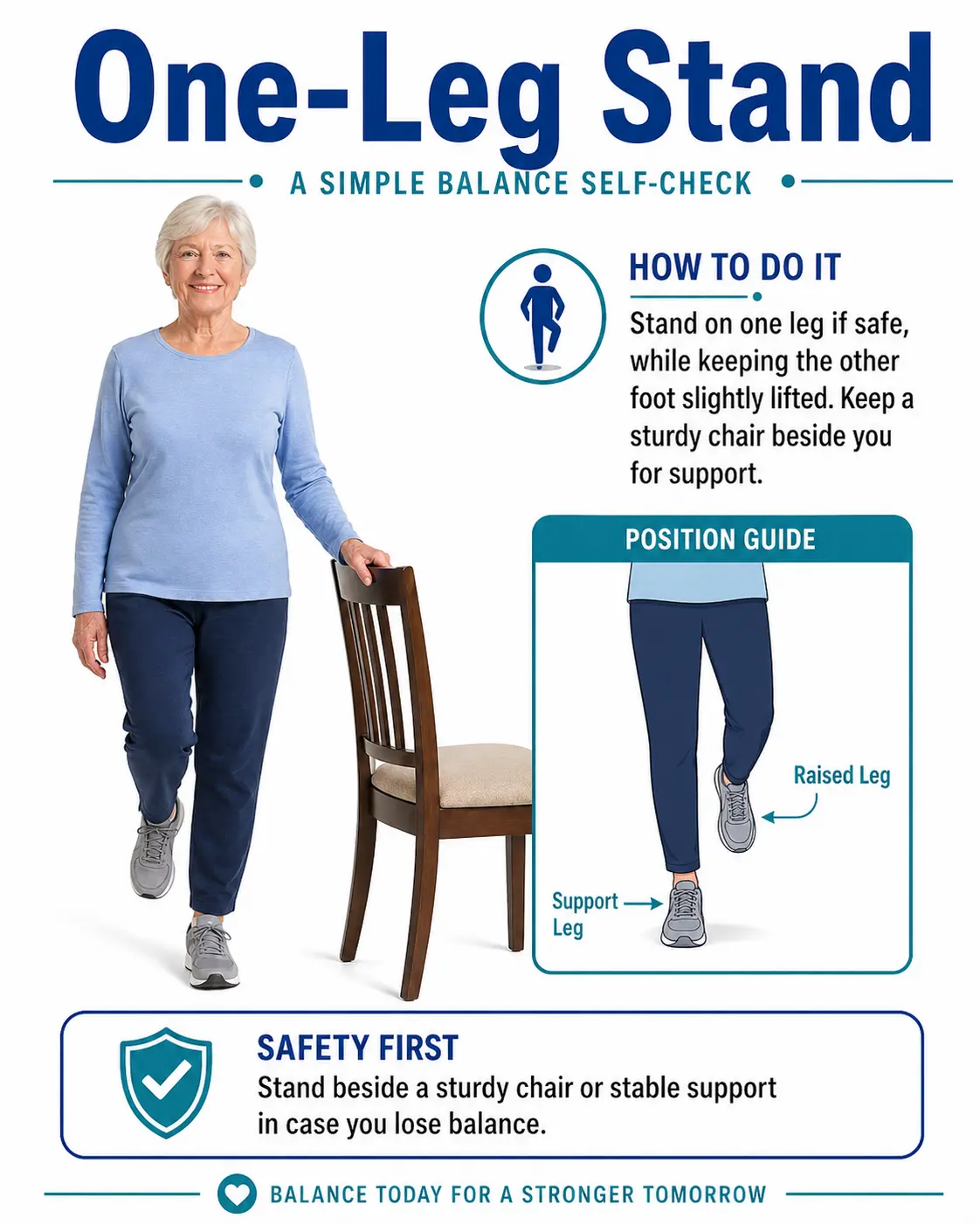
This image shows the one-leg stance for the final stage.
Choose one option only. Do not select a higher stage unless every earlier stage was also completed safely for 10 seconds without taking support.
HealthHub recommends including strength, balance and flexibility activity as part of healthy ageing.[3] These examples are general education, not individual treatment.
Falls and balance changes can have several contributing factors, including gait, strength, vision, medication, footwear, health conditions and the home environment.[2]
Arrange an appropriate healthcare review after a recent fall, repeated near falls or growing fear during normal daily movement.
Stop self-testing and seek advice when dizziness, faintness, pain, weakness or unsteadiness is new, persistent or worsening.
For sudden facial droop, arm weakness or speech difficulty, call 995 immediately.[4]
Strength, walking ability, reaction, confidence, vision, cognition and the home environment work together to support safer independence.
Official sources are provided so readers can verify the protocol, fall-prevention guidance and emergency advice.
Content reviewed 13 July 2026. References should be checked periodically because public-health webpages and clinical materials may be updated.