
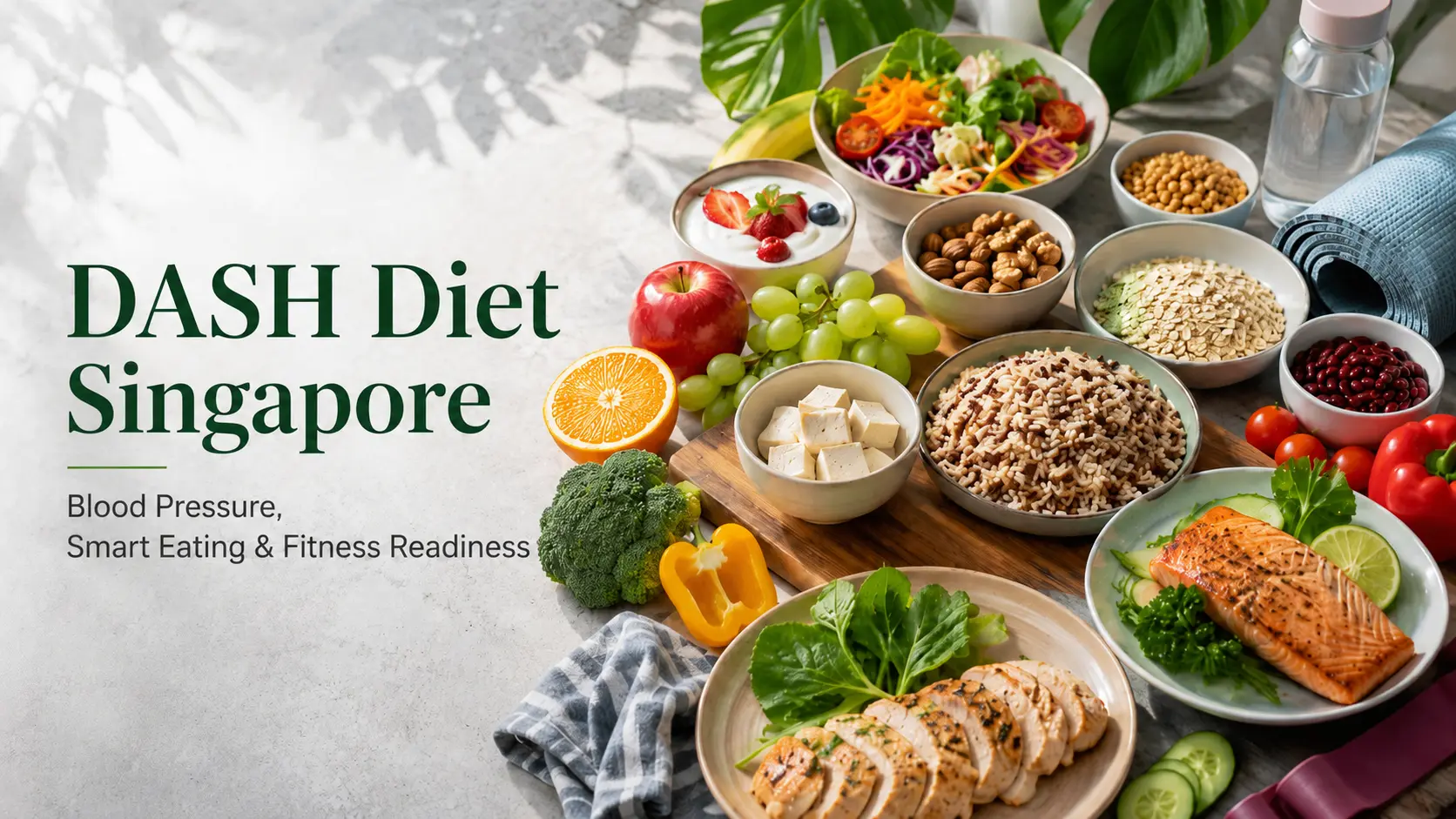
DASH Diet in Singapore: Blood Pressure, Smart Eating and Fitness Readiness
Fitness is not only about exercise. For many adults in Singapore, especially those in their 40s, 50s, 60s and beyond, health is shaped by movement, food choices, blood pressure awareness, sodium intake, recovery, sleep, body weight, medication history and daily lifestyle habits.
One evidence-informed eating pattern worth understanding is the DASH diet, which stands for Dietary Approaches to Stop Hypertension. DASH is not a crash diet. It is a flexible and balanced eating plan that supports a heart-healthier way of eating through vegetables, fruits, whole grains, lower-fat dairy, lean protein, beans, nuts, healthier oils and lower sodium intake.
DASH was developed around better eating patterns for people concerned about hypertension and heart health.
Sodium intake remains high locally, especially through sauces, seasonings and meals eaten outside the home.
Better eating habits can support energy, recovery, body composition and safer exercise progression.
DASH is useful not because it sounds trendy, but because it connects directly to a real-life issue: many people want to exercise, lose weight, age better or improve stamina, but their blood pressure, sodium intake and food habits may also need attention.
Why DASH Matters in Singapore
Singapore’s National Population Health Survey 2024 reported that chronic diseases remain a concern, with about 1 in 3 Singapore residents continuing to have hypertension and hyperlipidaemia. This makes blood pressure awareness a mainstream health issue, not a niche concern.
Sodium intake is another important issue. The Health Promotion Board states that 9 in 10 Singapore residents exceed the daily recommended sodium intake, with average sodium intake at around 3,620 mg per day. HPB also highlights that salt, sauces and seasonings added during cooking especially from meals eaten outside the home are key sources of sodium.
You may not add much salt at home, but sodium can still add up quickly from soups, gravies, soy sauce, chilli sauce, fish sauce, oyster sauce, preserved foods, processed meats, instant noodles, hawker meals, café meals and takeaway food.
What Is the DASH Diet?
DASH is a structured eating pattern rather than a rigid meal plan. It does not require special foods. Instead, it provides daily and weekly nutrition targets and encourages a pattern of eating that is lower in sodium and lower in saturated fat while being rich in important nutrients such as potassium, calcium, magnesium, fibre and protein.
DASH generally encourages:
- Vegetables and fruits
- Whole grains
- Low-fat or fat-free dairy products where suitable
- Fish, poultry, beans, tofu, nuts and seeds
- Vegetable oils instead of heavy saturated fat sources
- Less sodium
- Less sugar-sweetened drinks and sweets
A Quick DASH Serving Guide
The National Heart, Lung, and Blood Institute gives example daily and weekly targets for a 2,000-calorie DASH eating plan. These are not personalised prescriptions. They are a framework to help people understand the general direction of the diet.
| Food group | Example DASH target | Practical Singapore example |
|---|---|---|
| Grains | 6–8 servings per day | Choose more wholegrain bread, brown rice, oats or mixed grains where suitable. |
| Vegetables | 4–5 servings per day | Add vegetables at lunch and dinner; choose less oily vegetable dishes where possible. |
| Fruit | 4–5 servings per day | Choose whole fruit more often than sweet drinks or desserts. |
| Low-fat or fat-free dairy | 2–3 servings per day | Use lower-fat milk or yoghurt if suitable; seek advice if dairy does not suit you. |
| Lean protein | Fish, poultry and lean meats in sensible portions | Choose fish, chicken, tofu, eggs, beans and lean protein options more often. |
| Nuts, seeds, beans and peas | 4–5 servings per week | Use unsalted nuts, beans, lentils, tofu or legumes as part of meals or snacks. |
| Sodium | 2,300 mg per day; 1,500 mg may lower blood pressure further for some people | Ask for less sauce, less gravy, less soup, and choose lower-sodium options when available. |
What DASH Suggests Limiting
- Processed meats and fatty meats
- Excess full-fat dairy products
- Frequent deep-fried foods
- High-sodium soups, gravies, sauces and seasonings
- Sugar-sweetened beverages
- Highly processed snacks and convenience foods
- Alcohol, especially when intake becomes habitual or excessive
How DASH Connects With Fitness Readiness
For exercise, blood pressure matters. A person who wants to start training may not only need a workout plan. They may also need to understand their readiness, medication status, symptoms, medical history and lifestyle habits.
At UFitness, this is why screening matters before training. For adults over 40, seniors, or people managing chronic conditions, a responsible fitness approach should look beyond sets, reps and calories.
Food supports the internal environment. Exercise trains the body. The best lifestyle results often come when both are improved gradually and safely.
Where Erling Haaland’s Diet Fits Into This Discussion
Recent media coverage of Erling Haaland’s routine has attracted attention because of his disciplined eating, training and recovery habits. Reports describe a high-protein, high-calorie approach designed for elite football performance, together with a strong focus on training, recovery and sleep.
This is interesting for a fitness audience, but it must be interpreted carefully. Haaland’s diet is not a public-health eating pattern. It is a performance diet for an elite athlete with very high physical demands.
What Haaland’s Diet and DASH Have in Common
- Whole-food emphasis: both discussions value food quality over highly processed eating.
- Structured habits: both show that consistency matters more than random dieting.
- Protein matters: DASH includes fish, poultry, beans, tofu and nuts; athletes also prioritise protein for recovery.
- Fresh produce matters: vegetables and fruits remain useful across both health and performance conversations.
- Recovery matters: food, sleep and training are connected.
Where They Are Very Different
Haaland’s diet is built for an elite footballer. A normal adult, office worker, senior, beginner exerciser or person managing high blood pressure should not copy an elite athlete’s calorie load or food pattern directly.
High-calorie eating, frequent fatty red meat, organ meats, raw milk or performance-driven diets may not suit people with hypertension, high cholesterol, kidney disease, diabetes, digestive conditions, or lower activity levels. For most readers, DASH is the safer and more relevant public-health framework.
Singapore-Friendly DASH Adjustments
- Ask for less gravy, less sauce and less soup.
- Choose water or unsweetened drinks more often.
- Add vegetables where possible.
- Choose fish, tofu, eggs, beans or lean protein more often.
- Limit processed meats such as luncheon meat, sausages and heavily preserved items.
- Use wholegrain options where available.
- Reduce high-sodium condiments gradually rather than all at once.
Who Should Be More Careful?
DASH is widely respected, but no eating pattern should be applied blindly. People with hypertension, heart disease, diabetes, kidney disease, stroke history, digestive problems or those taking regular medication should consult a doctor or qualified dietitian before making major diet changes.
This article is for general education only. It is not medical advice, nutrition therapy, diagnosis or treatment. Do not stop or change medication based on this article. For condition-specific advice, consult your doctor, dietitian or qualified healthcare professional.
The UFitness Conclusion
DASH is not just about eating less salt. It is a practical reminder that health is built through daily patterns: better food quality, sodium awareness, sensible exercise, adequate recovery and long-term consistency.
Haaland’s diet makes the topic more interesting because it shows how seriously elite athletes treat nutrition, training and recovery. But for most adults in Singapore, the lesson is not to copy an elite athlete. The lesson is to build a sustainable lifestyle that matches your own health, age, medical history and fitness readiness.
Start With Readiness, Not Extremes
Whether you are restarting exercise after 40, supporting healthy ageing, managing blood pressure risk, or helping a senior move with more confidence, the safest path is gradual, screened and personalised.
UFitness supports a practical approach: screen first, start sensibly, build strength, improve movement, and develop habits that can last.
References
- National Heart, Lung, and Blood Institute. DASH Eating Plan .
- Ministry of Health Singapore. National Population Health Survey 2024 Report .
- Health Promotion Board Singapore. Sodium Reduction Pledge .
- Business Insider. Erling Haaland’s routine, diet and recovery habits .